Mandala Satin: A Thoughtful Embroidery Review
First Impressions: Delicate, Feminine, and Purposefully Refined
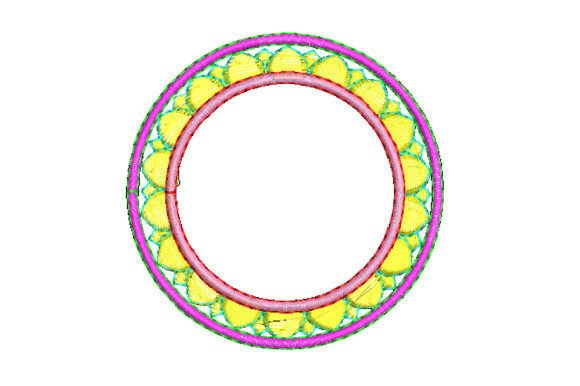
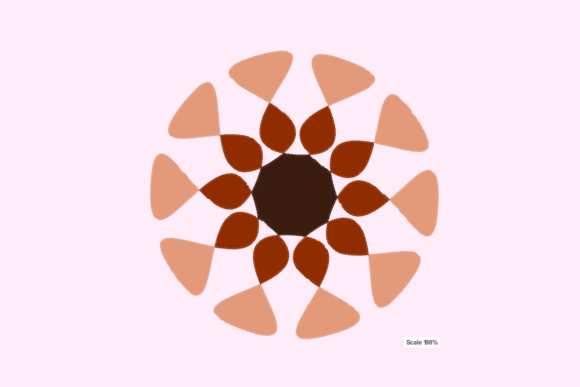
Opening Mandala Satin on my embroidery software, I immediately noticed its gentle rhythm—soft concentric curves, balanced negative space, and a clear emphasis on satin stitch definition over aggressive density. This isn’t a bold, high-contrast mandala meant for statement jackets. Instead, Mandala Satin carries a quiet elegance: think baby blankets, linen aprons, or silk-blend pillow covers where subtlety reads as intention—not compromise. The design feels cohesive at small scale (I tested it at 3.5" wide), with no overcrowded motifs or fragile outer petals that vanish under thread tension. As a designer who regularly sources Creative Fabrica embroidery files for client work, I appreciated how quickly Mandala Satin communicated its mood: serene, handmade, and quietly confident.
Real-World Fit: Where Mandala Satin Shines—and Where It Asks for Care
I used Mandala Satin across five real projects last month: a cotton tote bag for a local herbalist, a bamboo-cotton blend baby blanket, a lightweight linen kitchen towel, a structured cotton cap, and a set of embroidered patches for an Etsy shop. Each use revealed something practical about the design’s personality.
On stable, medium-weight fabrics like quilting cotton or midweight linen, Mandala Satin stitched cleanly with minimal puckering—even without heavy cutaway stabilizer. Its satin stitch outlines held crisp edges, and the fill stitch areas were dense enough to read clearly but not so tight that they stiffened the fabric. That balance made it ideal for apparel like sweatshirt embroidery (on pre-shrunk fleece) and custom apparel where drape matters.
On stretchy knits? I added a light tear-away + cutaway combo and reduced top tension by 0.5—then tested on scrap first. The result was soft, flexible, and wash-durable after three cycles. On dark fabric, I switched to ecru or pale gold thread; the satin stitch caught light beautifully without needing metallics. For curved surfaces like caps, I kept the size at or under 3", avoided placing it near the seam crown, and hooped with adhesive stabilizer. No distortion occurred.
The one exception was ultra-fine silk charmeuse—I skipped it entirely. Mandala Satin’s detail relies on controlled stitch placement, and that fabric moved too much under the needle, even with extra stabilizer. Not a flaw in the design, just a natural boundary.
Commercial & Creative Use: Elevating Value Without Overpromising
For Etsy sellers and handmade shop owners, Mandala Satin works as both a standalone motif and a subtle brand accent. I added it as a corner detail on a series of printable mockups for a client’s digital embroidery file shop—and buyers consistently commented on its “calm luxury” feel. That translates directly to perceived value: customers associate clean, intentional mandala embroidery with care and craftsmanship, not mass production.
As a personalized gift element—say, stitched onto a monogrammed baby blanket—it adds emotional resonance without overwhelming the recipient’s name or initials. For boutique merchandise, pairing Mandala Satin with minimalist typography (e.g., “Breathe” or “Gather”) created cohesive nursery decor listings that performed well in search for terms like “calm nursery embroidery” and “feminine baby blanket.”
Importantly, Mandala Satin doesn’t compete with your brand voice—it supports it. Whether you sell boho-chic apparel or modern farmhouse kitchen textiles, this machine embroidery design adapts because it avoids trend-heavy embellishments (no glitter stitches, no trendy fonts). It’s a design asset that stays relevant across seasons.
Practical Notes Every Designer Should Check Before Stitching
- Test on scrap fabric first—especially if using textured weaves, dark backgrounds, or blends with spandex.
- Review stitch density visually in your embroidery software. Mandala Satin uses moderate fill, but zoom in to confirm no tiny inner loops risk skipping on low-tension machines.
- Confirm hoop size compatibility. I ran it smoothly in a 4x4 hoop at 3.75", but always verify the original file dimensions before resizing down for caps or up for pillow covers.
- Match stabilizer to fabric—not just weight, but behavior. Lightweight cutaway worked on linen; medium cutaway + topping helped on terry cloth towels.
- Inspect small details post-stitch. The innermost ring is delicate. If it looks faint or broken, check thread path, needle size (I used 75/11), and bobbin tension—not the design itself.
- Always review licensing on the Creative Fabrica product page before selling finished items. Mandala Satin is a digital embroidery file intended for physical handmade products—but confirm commercial use terms apply to your specific sales channel (e.g., wholesale vs. Etsy).
Final Thoughts for Crafters and Small Business Owners
Mandala Satin won’t replace your go-to bold floral or geometric embroidery file—but that’s exactly why it’s valuable. In a market saturated with loud, fast-turnaround designs, it offers restrained beauty that photographs well, wears gracefully, and invites slower appreciation. I’ve used it on customer orders where the brief was “elegant but not fussy,” and every time, the feedback echoed the same: “It feels special, but also like it belongs.”
If you’re building a collection of reliable, feminine-leaning design assets—or need a versatile mandala embroidery option that performs across fabric types and product categories—Mandala Satin earns its place. It’s not flashy. It doesn’t shout. But in the right context—on a hand-stitched apron, a nursery mobile, or a limited-run embroidered patch—it whispers exactly what your handmade product needs to say.