Baby Tiger Lines: A Designer’s Real-World Embroidery Review
First Impression: Minimalist, Tender, and Surprisingly Expressive
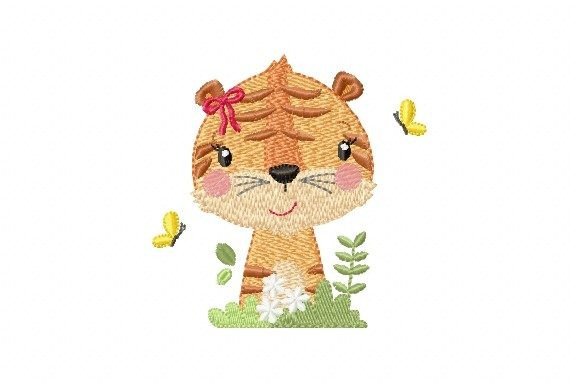
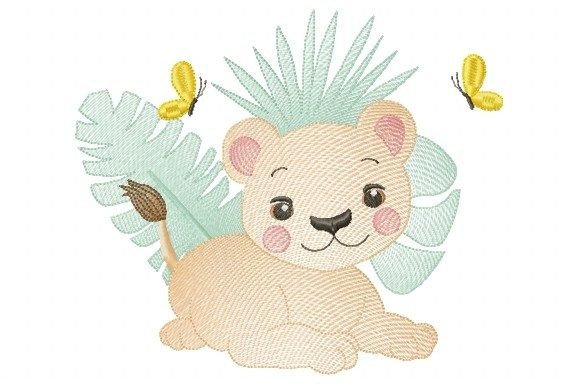
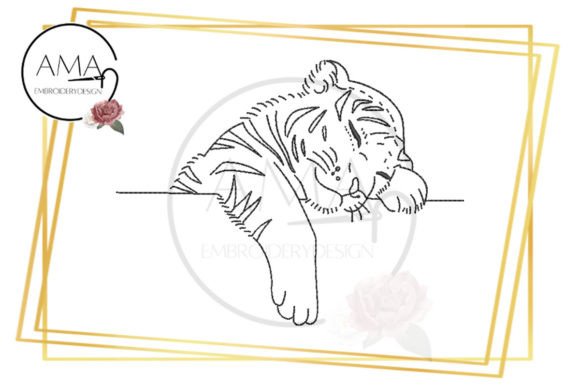
When I opened Baby Tiger Lines for the first time, I wasn’t expecting much beyond a stylized sketch—but what landed on my screen was something quieter and more intentional: a baby tiger resting his head, rendered entirely in layered running lines. No fill stitches, no satin borders—just triple-run line work that breathes with soft rhythm and gentle weight. It’s not cartoonish or cutesy; it’s tender, observant, and grounded in the Baby Animals theme without leaning into cliché. As a designer who regularly selects embroidery files for client projects and small-batch merchandise, I immediately pictured it stitched onto a lightweight organic cotton baby blanket—subtle enough for modern nursery decor, distinctive enough to feel handmade and meaningful.
Where It Shines: Real Projects, Real Customers
I tested Baby Tiger Lines on three real items: a linen tea towel for a local boutique launch, a custom sweatshirt for a new mom’s baby shower gift, and an embroidered patch sewn onto a reversible toddler apron. In each case, the design held its quiet charm. On the tea towel, the triple-run lines created delicate texture without stiffness—no puckering, no thread buildup. On the sweatshirt, it read clearly even at 3.5 inches wide, thanks to the confident spacing and intentional line weight. And on the patch? It translated beautifully to fused backing, holding shape through washing and wear.
This isn’t a design built for bold statement pieces—it’s for the thoughtful details: the inside hem of a onesie, the corner of a pillow cover, the chest pocket of a unisex kids’ tote bag. Etsy sellers will find it especially effective in listings where “handmade,” “minimalist,” and “gender-neutral” are key search signals. It supports brand consistency for small shops focused on slow-made, nature-inspired baby embroidery—no competing visual noise, just calm recognition.
Fabric & Fit: Know When to Lean In—and When to Pause
Baby Tiger Lines performs best on stable, medium-weight fabrics: midweight cotton, linen-cotton blends, brushed poly-cotton tees, and twill tote bags. I wouldn’t recommend it for ultra-thin voile or highly stretchy jersey without significant stabilizer testing—it’s line-based, so any fabric distortion shows quickly in the curves of the tiger’s ear or jawline. On dark fabric, contrast becomes critical: light ecru or oatmeal thread reads softly but warmly; stark white can feel clinical unless balanced with natural fiber texture. For caps or curved surfaces, keep sizing modest (under 3 inches) and confirm hoop clearance—those looping lines near the tiger’s paws need room to land cleanly.
It also doesn’t play well with heavy layering. Avoid placing it over seams, zippers, or thick quilted sections—line-based designs lose clarity when the base shifts under stitch tension. And while it’s lovely on baby clothes, skip dense knit bodysuits unless you’re using tear-away + cut-away combo stabilizer and reducing top tension slightly.
What This Means for Your Craft Business
As someone who helps makers position their embroidery offerings—not just stitch them—I’ve seen how a single well-chosen machine embroidery design can elevate perceived value. Baby Tiger Lines does that quietly: it signals care in curation, confidence in restraint, and alignment with current aesthetic preferences (think: Scandinavian baby brands, mindful parenting shops, ceramic-and-linen lifestyle boutiques). Customers notice when a design feels intentional—not just applied. That translates directly to higher engagement on product photos, better repeat rates on personalized gifts, and stronger trust in your shop’s visual voice.
For digital product sellers, this is a strong candidate for curated seasonal bundles—pair it with subtle moon phases or leaf motifs for a “Forest Friends” collection. Just remember: as a digital embroidery file, its strength lies in versatility, not volume. Don’t overload mockups with extra elements; let Baby Tiger Lines breathe in clean, well-lit printable mockups—white background, soft shadow, natural fabric drape.
Designer Notes You’ll Actually Use
- Always test first—run it on scrap fabric matching your final project’s weight and stretch. Line-based designs reveal stabilizer mismatches faster than fill-heavy ones.
- Check thread color contrast before stitching the final piece. What reads as warm beige on screen may disappear on oat-colored linen.
- Review stitch density visually—not just numerically. Triple-run lines should feel rich, not muddy. If adjacent lines blur, reduce density slightly or increase stabilizer support.
- Confirm hoop size compatibility early—especially if you’re digitizing companion text or planning multi-position layouts (e.g., tiger + name on a blanket corner).
- Inspect small details at actual stitch-out size: the curve of the tiger’s closed eye, the taper of his ear tip—these define character. If they fray or distort, adjust underlay or stabilizer choice.
- Test black-and-white mockups to gauge silhouette strength. If the shape dissolves without color, it may need slight simplification for very small applications.
- Compare light and dark fabric backgrounds side-by-side—even subtle shifts in thread sheen change mood dramatically.
- Use proper stabilizer: medium-weight cut-away for knits, tear-away for stable wovens, and always float a lightweight mesh for delicate linens.
- Verify licensing before selling finished products or bundling Baby Tiger Lines into commercial design assets. Not all embroidery files permit resale of physical goods or digital redistribution.
Final Thought: Less Is Truly More Here
Baby Tiger Lines won’t shout from a craft fair table—but it will draw people in. It’s the kind of embroidery detail that makes a customer pause, tilt their head, and say, “Oh, that’s sweet.” That quiet resonance is gold for handmade product makers, boutique owners, and designers building long-term brand warmth. It fits naturally into baby embroidery, holiday embroidery, and personalized gift workflows—not as filler, but as focus. Use it thoughtfully, test it honestly, and let its simplicity do the talking. Because sometimes, the most memorable finished product isn’t the busiest one—it’s the one that rests, just right, like a baby tiger with his head on his paws.