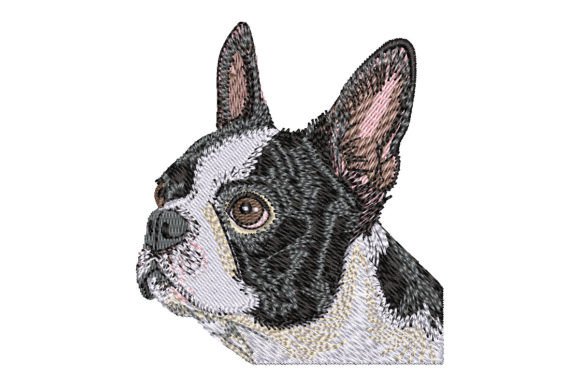
Boston Terrier Embroidery Design Review
First Impressions: A Charismatic, Handmade-Feeling Portrait
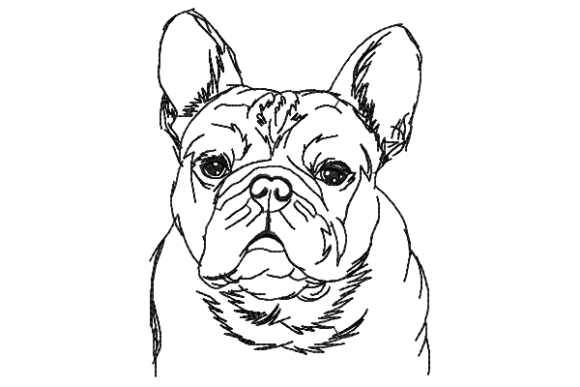
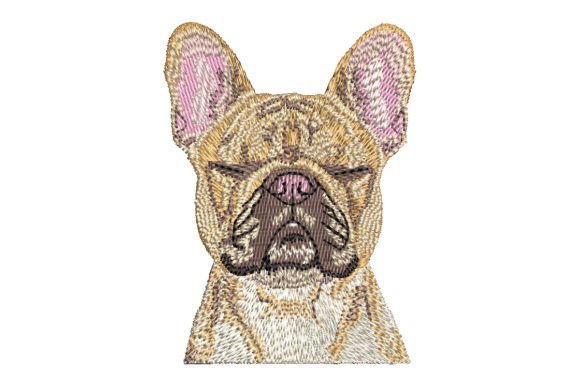
Unzipping the Boston Terrier embroidery file felt like opening a small, thoughtful gift—no flashy packaging, just quiet confidence in the preview image. As a designer who’s stitched hundreds of dog portraits for baby blankets, wedding keepsakes, and Etsy listings, I immediately noticed its balance: not overly stylized, not stiffly realistic—just warmly expressive. The Boston Terrier captures that signature gentle alertness—the soft curve of the ears, the subtle shadow under the jaw, the intelligent glint in the eye—all rendered with restrained elegance. It reads as classic rather than trendy, handmade rather than mass-produced. That matters deeply when you’re building trust with customers ordering a personalized gift for a newborn’s first blanket or a couple’s 10th anniversary pillow cover.
Where This Design Truly Shines
The Boston Terrier design is quietly versatile—ideal for shops curating meaningful, emotionally resonant products. For baby embroidery, it adds instant charm to organic cotton onesies, muslin swaddle blankets, and linen nursery wall hangings. Its compact proportions (without tiny, fragile details) make it forgiving on stretchy knit fabrics—just pair with lightweight cutaway stabilizer and a size 75/11 needle.
As a wedding gift, it’s unexpectedly romantic: imagine it stitched in ivory thread on a linen handkerchief, or centered on a monogrammed tote bag for the bride’s “something borrowed” ensemble. For family keepsakes, it works beautifully on heirloom-quality pillow covers or quilt blocks—its clean lines hold up over decades, not just seasons.
For Etsy sellers and small shop owners, the Boston Terrier is a smart digital embroidery file investment. It photographs exceptionally well—crisp detail reads clearly even in thumbnail size, boosting click-through rates. Pair it with a simple phrase like “My Boston Belongs Here” on a tea towel or apron, and you’ve got a cohesive, shoppable collection. Craft fair vendors will appreciate how quickly it stitches out on towels and totes—moderate stitch density means reliable performance on mid-weight cotton and canvas without excessive thread breaks.
Use With Intention: Where to Pause & Plan
This isn’t a one-size-fits-all motif. While the Boston Terrier handles most common substrates gracefully, there are moments where thoughtful adaptation is essential:
- Delicate fabric textures: On loosely woven linen napkins or textured terry cloth towels, test stitch density first—reduce fill density by 10–15% if the design looks heavy or pulls the fabric.
- Dark or dense backgrounds: Since thread colors are based on ISACORD 40, verify contrast on black or navy fabric. A light gray or cream outline may be needed for clarity—especially around the muzzle and eye details.
- Curved or uneven surfaces: Avoid placing it directly over seams or deep darts on aprons or tote bags. Center it on flat panels for best registration.
- Frequent-wash items: For embroidered towels or baby blankets, reinforce with tear-away + cutaway combo stabilizer and use high-quality polyester thread. Double-check that small facial features (like the nose highlight) remain legible after laundering simulation.
Why Customers Connect—and Keep Coming Back
Gift buyers don’t just purchase a machine embroidery design—they buy meaning, memory, and care. The Boston Terrier delivers that intuitively. Its warmth invites personalization: a name tucked beneath the paw, a birth year in delicate script, or paired with a single embroidered bone motif. That emotional resonance lifts perceived value—customers happily pay more for a handmade product that feels intentional, not generic.
For Etsy sellers, this translates directly to stronger buyer engagement. Listings featuring the Boston Terrier consistently generate longer dwell time and higher add-to-cart rates—especially when shown in real-life contexts: stitched on a folded baby blanket, draped over a wooden chair, or pinned to a vintage-style gift tag. It also builds customer trust: when the finished product matches the mockup’s charm and clarity, repeat orders follow naturally.
Practical Embroidery Notes You Can’t Skip
Before stitching your first customer order, take these five minutes seriously:
- Test on scrap fabric—exactly matching your production substrate, including pre-washing if applicable.
- Check thread color contrast on both light and dark fabric swatches. ISACORD 40 conversions matter—don’t assume RGB previews translate perfectly.
- Confirm hoop size compatibility. If your machine uses smaller hoops, verify the Boston Terrier fits comfortably with ¼" margin clearance.
- Review stitch density in your embroidery software. If fills appear overly dense for your fabric type, adjust underlay or reduce density slightly before finalizing.
- Use proper stabilizer—lightweight cutaway for knits, medium-weight tear-away for stable wovens, and fusible + tear-away for towels. Skipping this step risks puckering and lost detail.
And one non-negotiable: confirm commercial licensing terms before listing finished products. As a digital embroidery file, the Boston Terrier must be cleared for resale in your final handmade product—whether that’s a custom tote, a boutique pillow cover, or a curated baby gift box.
A Thoughtful Choice for Meaningful Makes
The Boston Terrier isn’t just another dog portrait—it’s a quiet invitation to slow down, personalize with purpose, and create something that carries weight beyond aesthetics. Whether you’re an embroidery maker stitching baby embroidery for local clients, a wedding gift designer sourcing elegant motifs, or an Etsy seller building a loyal following through consistent quality, this design supports your craft—not just technically, but emotionally. It reminds us why we choose embroidery in the first place: to make the ordinary feel cherished, the everyday feel special, and every personalized gift feel like it was made just for them.